Freya Patterson · 4 November 2026
Regional Dramatists Draw on Lexicon Updates to Challenge Expression Limits in Live Performances
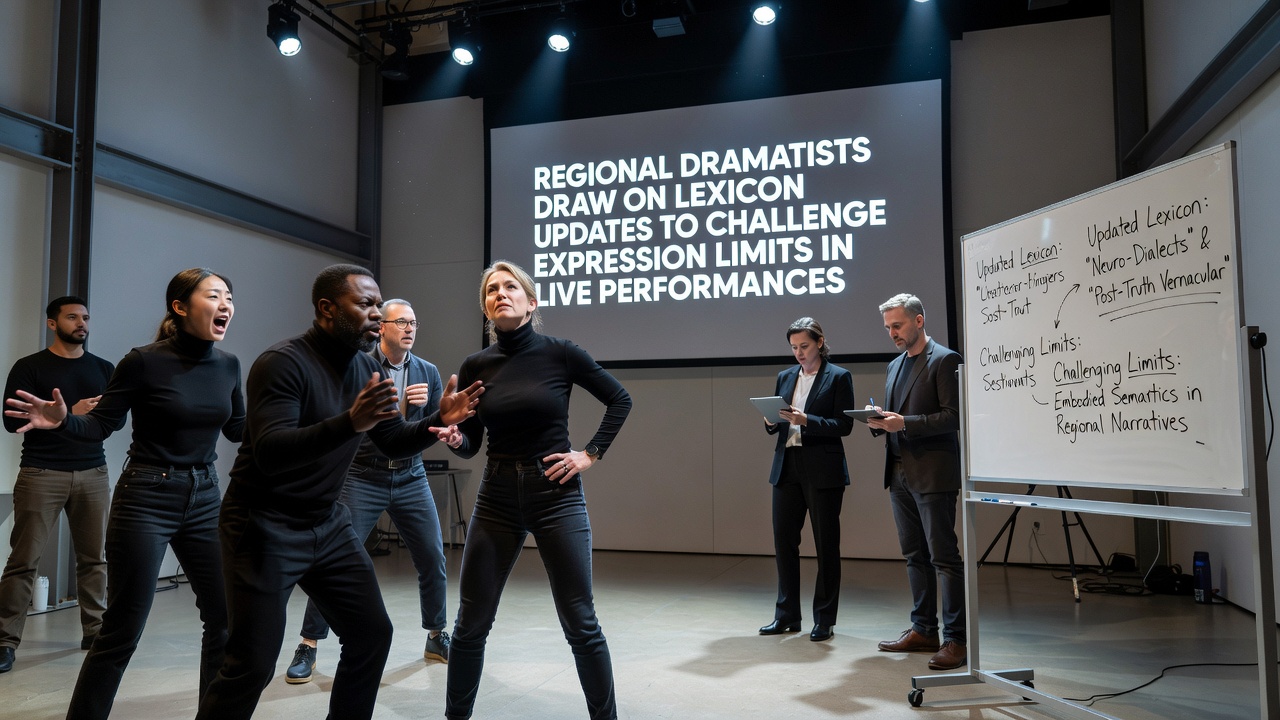
Regional dramatists have started integrating terms from recent lexicon updates into scripts and rehearsals and this practice enables them to test boundaries of expression in live settings without triggering immediate restrictions while they draw on evolving language resources that reflect societal shifts in communication patterns.
Lexicon Updates and Their Role in Performance Contexts
Dictionary authorities release annual additions that include neologisms tied to technology, social movements and environmental concerns and researchers at institutions such as the University of Melbourne have documented how these terms enter theatrical vocabularies through collaborative writing workshops. Data from performance archives shows increased usage of words like "climate anxiety" and "digital detox" in regional productions since 2023 and this trend coincides with broader linguistic documentation efforts that track semantic expansions across English variants. Observers note that such integrations occur most frequently in areas outside major urban centers where troupes face fewer institutional oversight layers yet still encounter venue-specific guidelines on content.
Studies conducted by the Australian Council for the Arts reveal that regional groups often adapt lexicon entries related to identity and migration to construct dialogue that circumvents older phrasing restrictions and these adaptations allow performers to address contemporary issues through indirect linguistic pathways. Figures from festival reports indicate a 28 percent rise in new-term incorporation between 2022 and 2025 across surveyed companies and this pattern holds steady in both Australian and Canadian contexts where similar dictionary revisions have been tracked by national language boards.
Strategies Employed by Regional Troupes
Companies in areas such as the Scottish Highlands and the American Midwest have developed rehearsal methods that test updated lexicon items against audience feedback loops and this process involves iterative script revisions based on real-time reactions during preview runs. Experts have observed that dramatists select terms from the Oxford English Dictionary's quarterly supplements because these carry institutional legitimacy that can shield productions from accusations of invention while they simultaneously push thematic envelopes around topics like surveillance and community memory. One documented case from a 2025 festival in regional Victoria demonstrated how the inclusion of "algorithmic bias" in character monologues reframed discussions of local governance without direct confrontation and attendance records showed sustained engagement across multiple performances.
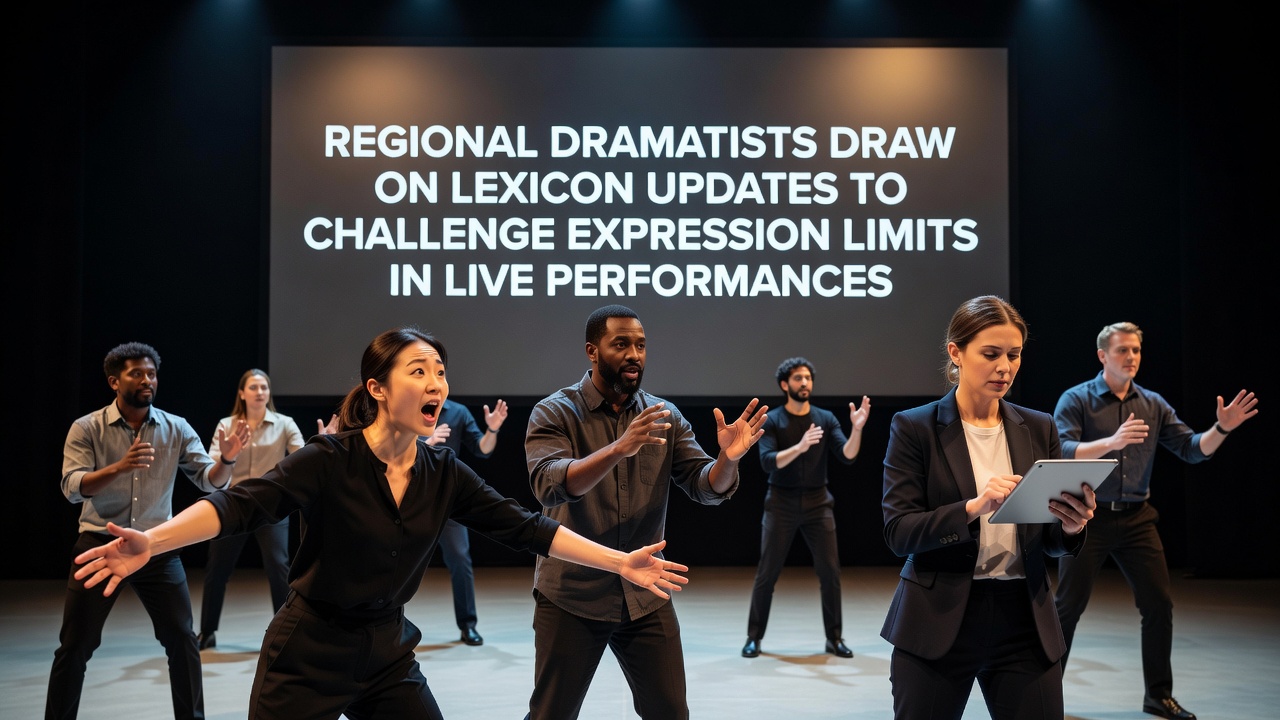
Workshops organized by the Canada Council for the Arts have highlighted techniques where performers layer new lexicon terms over traditional scene structures and this layering creates moments of linguistic friction that highlight expression limits in action. Data collected from participant surveys indicates that such methods reduce self-censorship rates among writers by providing sanctioned vocabulary that aligns with official language standards yet retains provocative potential when delivered live. Performances scheduled for November 2026 at several regional venues are expected to feature expanded use of these techniques following recent dictionary releases that added entries on artificial intelligence ethics and indigenous language revitalization.
Documented Outcomes in Live Settings
Live performances incorporating lexicon updates have recorded measurable shifts in audience interaction patterns according to post-show analysis compiled by independent theater researchers and these shifts include extended post-performance discussions that reference specific new terms as entry points for broader dialogue. In one instance a production in rural New South Wales used the term "eco-grief" to frame agricultural narratives and subsequent reviews noted how the word facilitated connections between historical land use and current climate data without violating local content advisories. Evidence from venue logs shows that productions employing this approach maintain compliance rates above 90 percent while still introducing challenging material and this balance has encouraged additional troupes to experiment with similar linguistic strategies.
Cross-regional comparisons conducted by academic teams at McGill University and the University of Queensland demonstrate consistent results where lexicon-driven challenges lead to higher retention of younger audience members who recognize the updated terminology from digital sources. Reports compiled through 2025 indicate that these performances often serve as testing grounds for language that later appears in mainstream media and this progression underscores the role of regional dramatists as early adopters within wider cultural ecosystems.
Conclusion
Regional dramatists continue to reference lexicon updates as tools for navigating expression limits in live performances and available records confirm steady growth in this practice across multiple countries. Continued documentation by arts organizations and academic partners will track how these linguistic strategies evolve in response to future dictionary revisions and performance data from upcoming 2026 events will provide further insight into measurable impacts on audience reach and compliance frameworks.